
Manuel Tejada and the Architecture of Dominican Sound
Behind songs, orchestras, and productions, Manuel Tejada’s arrangements connect Dominican rhythm with brass, electronics, jazz, pop, and careful musical structure.
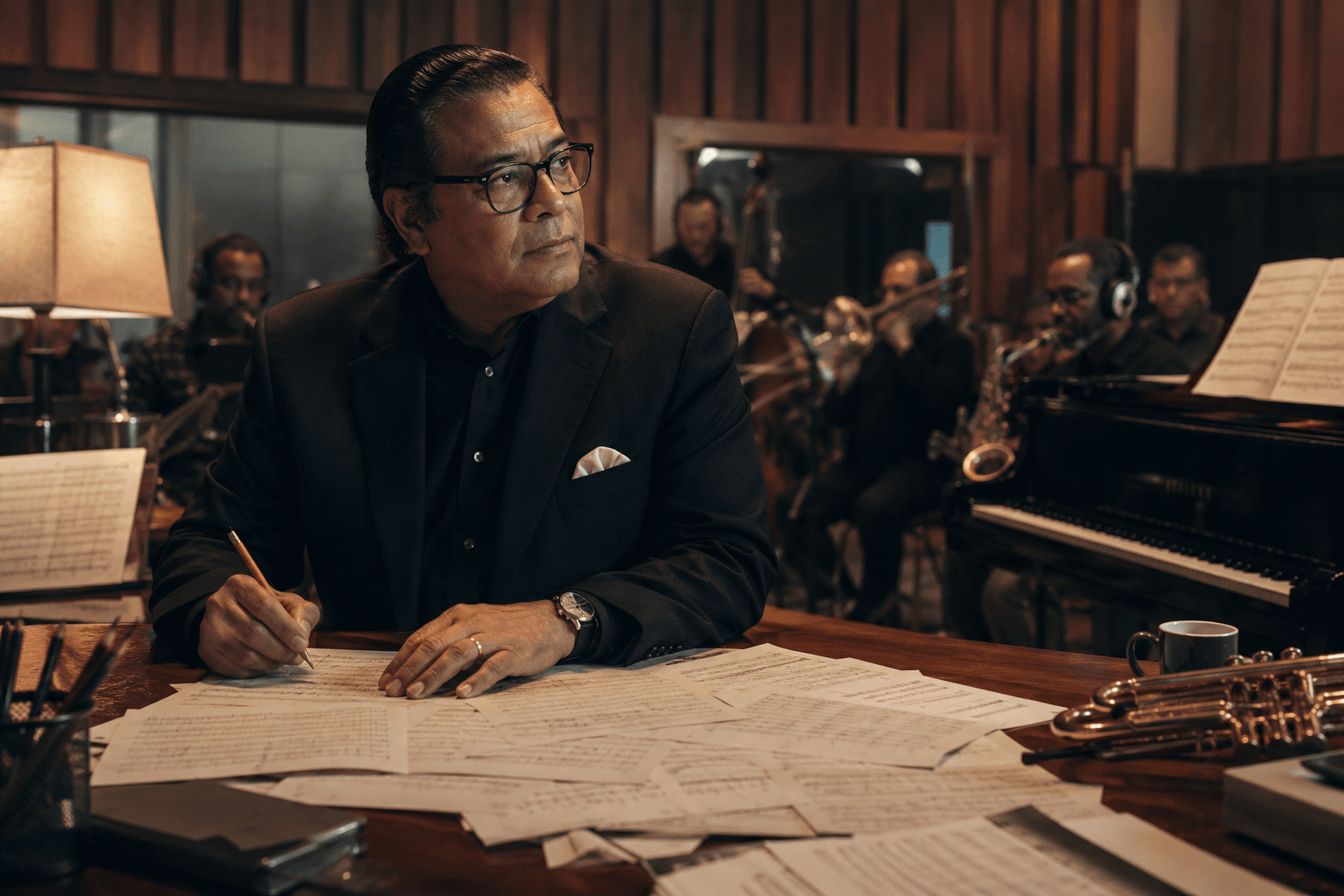
Temporary symbolic artwork for the Manuel Tejada Artist Story until authorized photography is available.
Photo: World Star Dominican
Summary
Manuel Tejada is a Dominican composer, arranger, producer, and instrumentalist whose work connects Afro-Caribbean rhythm with electronic textures, jazz, pop, and dynamic brass arrangements. His career demonstrates how musical architecture can shape a song without overshadowing its performers. “Para Quererte,” the Dominican Republic’s winning entry at Viña del Mar in 1986, offers one focused example of that collaborative craft.
A song’s most recognizable voice may belong to its singer, but much of its character is built behind the spotlight. The arranger decides how rhythm, harmony, brass, and texture move together; the producer helps turn those choices into a finished recording. Manuel Tejada’s career offers a way to hear that often-invisible work within Dominican popular music.
After studying at the Dominican Conservatory, Tejada began composing in the late 1970s and developed a musical language shaped by Afro-Caribbean rhythms and electronic instruments. His work would move across jazz, pop, and Dominican dance music without treating those traditions as fixed categories.
As merengue changed during the 1980s and 1990s, Tejada participated in its evolving sound through arrangements informed by contemporary technology, American pop and rhythm and blues, and forceful brass writing. That contribution belongs within a broader collective evolution of the music, not to a single creator.
“Para Quererte” provides a focused example of Tejada’s collaborative craft. With music by Manuel Tejada and lyrics by José Antonio Rodríguez, the song was performed by Maridalia Hernández and won the international competition for the Dominican Republic at the 1986 Viña del Mar festival.
Tejada’s work has also extended beyond individual recordings. Profiles of his career describe production for records, advertising, and film, alongside orchestral projects and live musical direction. Across those settings, the connecting practice is arrangement: giving each element a role while preserving the identity of the rhythm.
That is the architecture in Tejada’s sound. It is not a claim to have invented a genre, but an approach to building music carefully enough that tradition, technology, and performance can meet inside the same song.
I did it thinking it could evolve and become a fusion, adding elements that contributed to our rhythm rather than taking it apart.
Manuel Tejada, translated from a 2019 Listín Diario interview
Timeline
Late 1970s
Early compositions
After studying at the Dominican Conservatory, Tejada began composing songs and developing a musical language shaped by Afro-Caribbean rhythms and electronic instruments.
1980s–1990s
Arranging a changing merengue sound
Tejada participated in the evolving sound of Dominican merengue through arrangements influenced by contemporary technology, pop, rhythm and blues, and dynamic brass.
1986
“Para Quererte” wins at Viña del Mar
The song, with music by Manuel Tejada and lyrics by José Antonio Rodríguez, was performed by Maridalia Hernández and won the international competition for the Dominican Republic.
Across his career
Music beyond recordings
Tejada’s work has included record production, advertising, film scoring, orchestral projects, and live musical direction.