
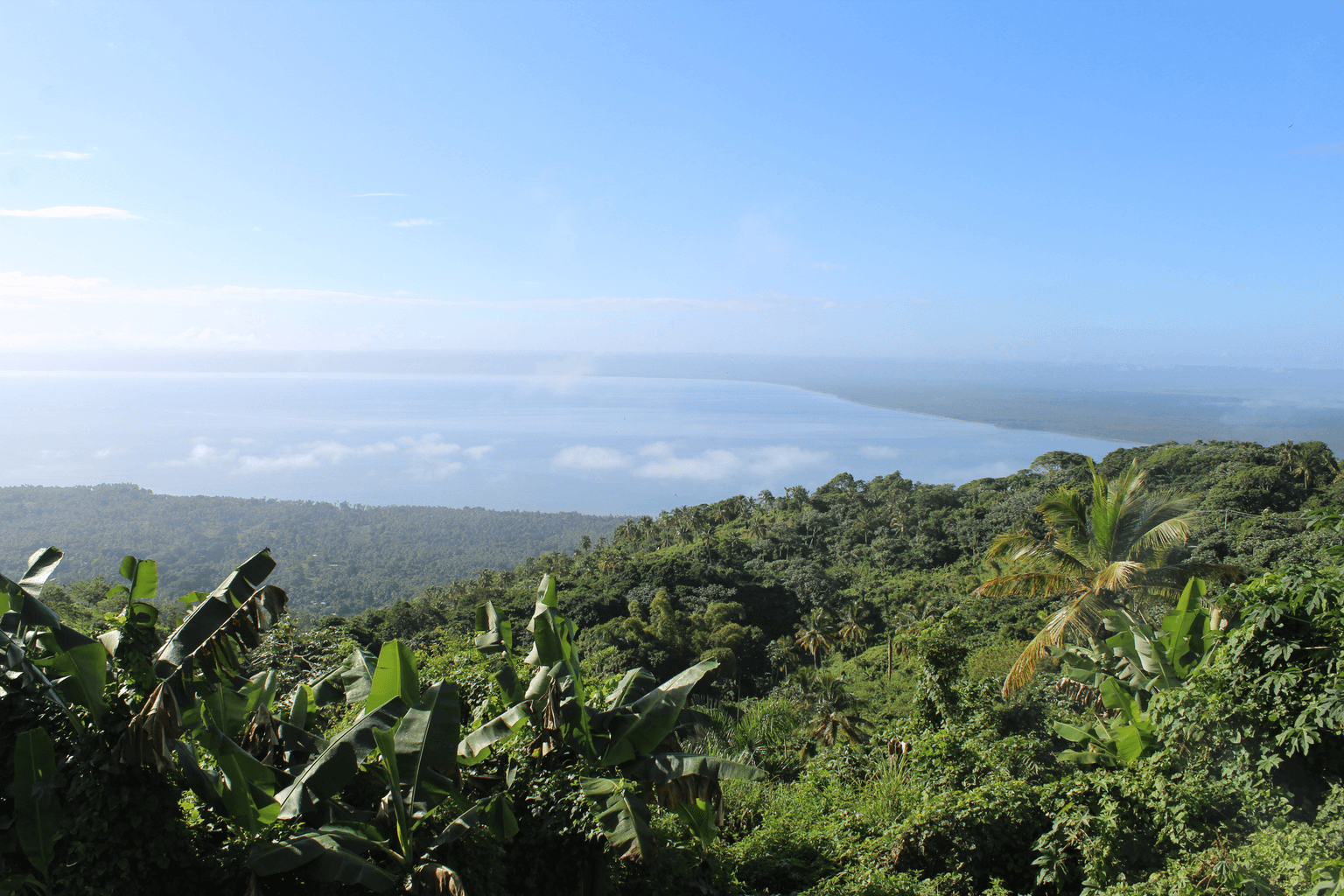
Geography and orientation
Samaná is a peninsula and province on the Dominican Republic’s northeast coast, not one compact resort zone. WSD groups the peninsula with Las Terrenas because many travelers combine them, while keeping the geography honest: Santa Bárbara de Samaná, Las Terrenas and Las Galeras are distinct bases with different coastlines, rhythms and access patterns.
Santa Bárbara faces Samaná Bay and is the strongest gateway for whale season and bay excursions. Las Terrenas sits on the Atlantic-facing north coast with several beaches and the peninsula’s broadest independent dining and evening scene. Las Galeras lies farther east and works best for travelers prioritizing quieter beaches and outdoor excursions. El Limón, Playa Rincón, Cayo Levantado and Los Haitises are experiences within the wider trip, not neighborhoods of one town.
Why go
Few Dominican destinations combine this much variety without losing a coherent sense of place. In one peninsula trip you can move from Atlantic beaches and a cosmopolitan beach town to a bayfront provincial capital, mangrove-and-karst protected landscapes, waterfalls, quieter eastern beaches and one of the Caribbean’s important humpback-whale habitats.
Samaná also deserves more cultural depth than the standard whales-waterfall-beaches formula. The peninsula carries an important Afro-American settlement legacy, regional food traditions built around seafood, coconut and ginger, and communities distinct enough that choosing where to stay changes the trip.
Areas and neighborhoods
Santa Bárbara de Samaná
The provincial capital on Samaná Bay: waterfront, whale-season departures, boat excursions, cultural landmarks and the reconstructed Malecón.
Choose it when bay access and whale-season logistics matter more than a broad beach-town scene.
Las Terrenas
The north-coast beach and lifestyle base, with Punta Popy, Playa Las Ballenas, Playa Bonita and Cosón plus the peninsula’s strongest mix of independent restaurants, cafés and evenings.
A versatile independent base, but not the closest launch point for every eastern-peninsula excursion.
Las Galeras
A smaller eastern-peninsula base with a quieter atmosphere and strong access to beaches and marine/outdoor excursions including Playa Rincón.
Pick it intentionally for a slower nature-first stay; crossing the peninsula takes time.
El Limón
An inland district best known for the Salto El Limón waterfall and surrounding tropical landscape.
Check current trail conditions, access arrangements, operator practices and fees before a tightly scheduled visit.
Playa Rincón
A long bay near Las Galeras with different water conditions across its length rather than one uniform swimming environment.
Some sections are calmer while more exposed sections receive rolling surf; choose your spot according to conditions.
Cayo Levantado
A small island in Samaná Bay with a public visitor side and a resort-controlled side.
Public visits can face restrictions on some large-cruise-ship days, so confirm access for the actual date.
Los Haitises
A protected mangrove-and-karst landscape linked to Samaná through boat excursions and specific public-use routes.
Do not assume every cave or landing is open; Cueva de La Línea was temporarily closed in June 2026 while other enabled public-use areas remained open.
Essential experiences
See humpback whales only in the regulated season
Samaná Bay is a signature whale-watching area, with the activity managed through environmental authorizations and operator rules. Treat it as seasonal wildlife viewing, not an attraction available all year.
The 2026 season has ended. Confirm the next official season and authorized operators before booking a whale-specific trip.
Explore Los Haitises with route-level accuracy
Los Haitises brings mangroves, limestone karst, caves and protected ecosystems into the Samaná itinerary. The experience depends on the specific public-use route and gateway rather than one generic park tour.
Cueva de La Línea was temporarily closed in June 2026 because of its access pier; other enabled public-use areas continued operating.
Reach Salto El Limón without turning it into a race
El Limón is the peninsula’s classic inland waterfall excursion and official tourism material recognizes hiking and horseback approaches through the surrounding landscape.
Avoid stale promises about exact minutes, height, price or trail condition. Confirm the current access model.
Beach-hop Las Terrenas instead of choosing one “best beach”
Punta Popy, Las Ballenas, Playa Bonita and Cosón offer different combinations of town access, walking, swimming, surf and open-coast feel.
Atlantic conditions change. Read the water and follow local safety guidance rather than assuming every beach is calm.
Use Las Galeras for the eastern peninsula
Las Galeras is the better base when Playa Rincón and a quieter eastern-peninsula rhythm are central to the trip. Playa Rincón itself changes character across its long shoreline.
Do not treat Las Galeras as a quick neighborhood of Las Terrenas; travel times matter.
Spend time on the Samaná Bay waterfront
Santa Bárbara adds a real town and bayfront dimension to a trip that can otherwise become a string of excursions. Its reconstructed Malecón connects boats, public space and provincial life.
Whale season and cruise activity can change the waterfront rhythm by day.
Taste the peninsula rather than chase a restaurant list
Fresh fish, Sánchez shrimp, coconut, ginger and pescado con coco give Samaná a recognizable regional food identity, while Las Terrenas adds a wider international dining mix.
Use named restaurants only after a fresh operational check. The rebuilt Pueblo de los Pescadores is a renewed public plaza, not the unchanged pre-2021 row.
Culture and history
Samaná’s cultural story is inseparable from migration. In the 1820s, free Black migrants from the United States settled in the peninsula during the period of Haitian rule over the island. Samaná became one of the places where that community maintained a particularly visible religious, linguistic and family legacy.
Saint Peter’s Church—widely known locally as La Chorcha—has been recognized by Dominican cultural authorities as a symbol of that Afro-American presence. WSD should present this as living historical inheritance without pretending that two centuries of language, religion and custom survived unchanged or uniformly.
That context matters because it changes how the peninsula is read. Samaná is not only spectacular scenery; it is also a place shaped by Atlantic migration, fishing, agriculture, religion, tourism and repeated changes to its towns and waterfronts.
Food
Samaná has a strong regional food identity. Official tourism material highlights fresh fish from Samaná, shrimp from Sánchez, coconut and ginger, with pescado con coco treated as one of the peninsula’s characteristic dishes.
Las Terrenas adds another layer: a long-standing international resident community has helped create a dining scene where Dominican seafood cooking sits beside French, Italian and other international influences. That cosmopolitanism should complement rather than erase local food traditions.
The rebuilt Plaza del Pueblo de los Pescadores was delivered in 2025 after the 2021 fire. Treat it as a renewed public and food space; do not freeze a tenant list or describe the physical row as though the fire and reconstruction never happened.
Where to base yourself
Santa Bárbara de Samaná — best for the bay and whale-season logistics
Choose Santa Bárbara if the trip centers on Samaná Bay, seasonal whale watching, Cayo Levantado, boat excursions and a short nature-focused stay. It gives you the strongest bayfront orientation but not Las Terrenas’ beach-town rhythm.
Las Terrenas — best all-around independent base
Las Terrenas works best for travelers who want several beaches, restaurants, cafés, evenings and enough infrastructure to stay for multiple days without making every meal or activity an excursion. It is the most versatile base, not automatically the closest base to everything.
Las Galeras — best for quieter eastern beaches and outdoor priorities
Las Galeras suits travelers intentionally prioritizing Playa Rincón, a slower town and the eastern peninsula. It is less convenient for frequent back-and-forth trips to Las Terrenas or Santa Bárbara.
A split stay — best for understanding the peninsula
For five nights or more, splitting time between Las Terrenas and either Santa Bárbara or Las Galeras can reveal much more of Samaná than commuting across the peninsula every day.
Getting there
El Catey / Presidente Juan Bosch International Airport (AZS) is the peninsula’s principal airport. AERODOM lists it about 23 km from Las Terrenas, 46 km from Santa Bárbara de Samaná and 74 km from Las Galeras. Those distances are a useful reminder that “Samaná” is not one small hotel zone.
Official tourism material places Samaná roughly 2.5–3 hours by road from Santo Domingo under normal planning conditions. Actual transfer time varies with origin, weather, stops and road conditions, so WSD should not promise minute-perfect travel times.
Do not build an evergreen guide around current airline routes. Air service is volatile; check AZS and airline schedules for the actual travel dates.
Getting around
A peninsula trip benefits from deliberate transport planning. Las Terrenas is easy to experience locally once you are based there, but Santa Bárbara, Las Galeras, El Limón and the more remote beaches are far enough apart that repeated cross-peninsula transfers can consume a meaningful part of the day.
A rental car, prearranged driver or organized excursion can each make sense depending on the route. Boat transport is part of the experience for Cayo Levantado and many Los Haitises itineraries. Whale-watching boats should be properly authorized for the relevant season.
Do not turn generic local transport advice into a safety guarantee. Confirm current road, boat and weather conditions for routes that depend on remote access or open water.
When to go
The best timing depends on why you are going. January through March is the whale-watching period to watch for, but each season requires fresh official confirmation. Las Terrenas and the beaches work beyond whale season, so there is no reason to reduce the whole peninsula to a three-month destination.
The northeast is humid and can receive meaningful rain even during popular winter travel months. Official Las Terrenas tourism guidance describes December through April as the drier period, but WSD should not promise dry weather.
The official Atlantic hurricane season runs June 1 through November 30. That does not make every summer or autumn trip unsuitable; it does mean travelers should monitor current National Hurricane Center and local forecasts.
Suggested trip length
2–3 nights — focused Samaná Bay trip
Enough for Santa Bárbara plus one major nature or island experience, particularly when whale season is the main reason for going.
3–5 nights — Las Terrenas-focused stay
A strong first visit when beaches, food, evenings and one or two excursions matter more than covering the entire peninsula.
5–7 nights — real peninsula trip
The better choice if you want Las Terrenas plus Santa Bárbara or Las Galeras, several beaches and at least one major nature excursion without turning the vacation into continuous transfers.
Nearby excursions
Within the destination, the most logical side trips are El Limón, Cayo Levantado, Playa Rincón and route-specific Los Haitises excursions. Treat them as separate half-day or full-day planning decisions rather than assuming they all sit beside one hotel zone.
Sánchez adds fishing and food context on the southwest side of the province, especially for the region’s shrimp tradition. Travelers continuing west can connect toward María Trinidad Sánchez and Río San Juan; travelers continuing southeast can link toward Sabana de la Mar or Miches, but those are onward-route decisions rather than casual add-ons.
Current notes
Frequently asked questions
Are Samaná and Las Terrenas the same place?
No. Samaná is a province and peninsula; Santa Bárbara de Samaná is the bayfront provincial capital. Las Terrenas is a separate municipality on the peninsula’s north coast, while Las Galeras is farther east. They can be combined in one trip, but each works as a different base.
When is whale-watching season in Samaná?
Whale watching is seasonal, generally centered on January through March, and is regulated by Dominican environmental authorities. The 2026 season has ended; confirm the next official season dates and authorized operators before planning a whale-specific trip.
How many days do you need for Samaná and Las Terrenas?
Three to five nights works well for a Las Terrenas-focused trip with one or two excursions. Five to seven nights is better for a true peninsula trip that combines Las Terrenas with Santa Bárbara or Las Galeras without spending every day in transit.
Where should you stay: Las Terrenas, Samaná or Las Galeras?
Las Terrenas is the most versatile base for beaches, food and evenings. Santa Bárbara de Samaná is strongest for Samaná Bay, whale season and boat excursions. Las Galeras is the quieter choice for eastern beaches and nature-focused travel.
Is Los Haitises fully open?
Do not assume every route is open. In June 2026, Cueva de La Línea was temporarily closed because of deterioration at its access pier, while other enabled public-use areas continued operating. Check the specific route before visiting.
Can you visit Cayo Levantado without staying at the resort?
Official Dominican tourism information describes a public visitor side of Cayo Levantado reached by boat from Samaná, separate from the resort-controlled side. Access can be restricted on some large-cruise-ship days, so confirm for your date.