
Hispaniola before 1492
Archaeology, cave art, ceramics, settlement, exchange, and Indigenous knowledge complicate any story that begins with European arrival.
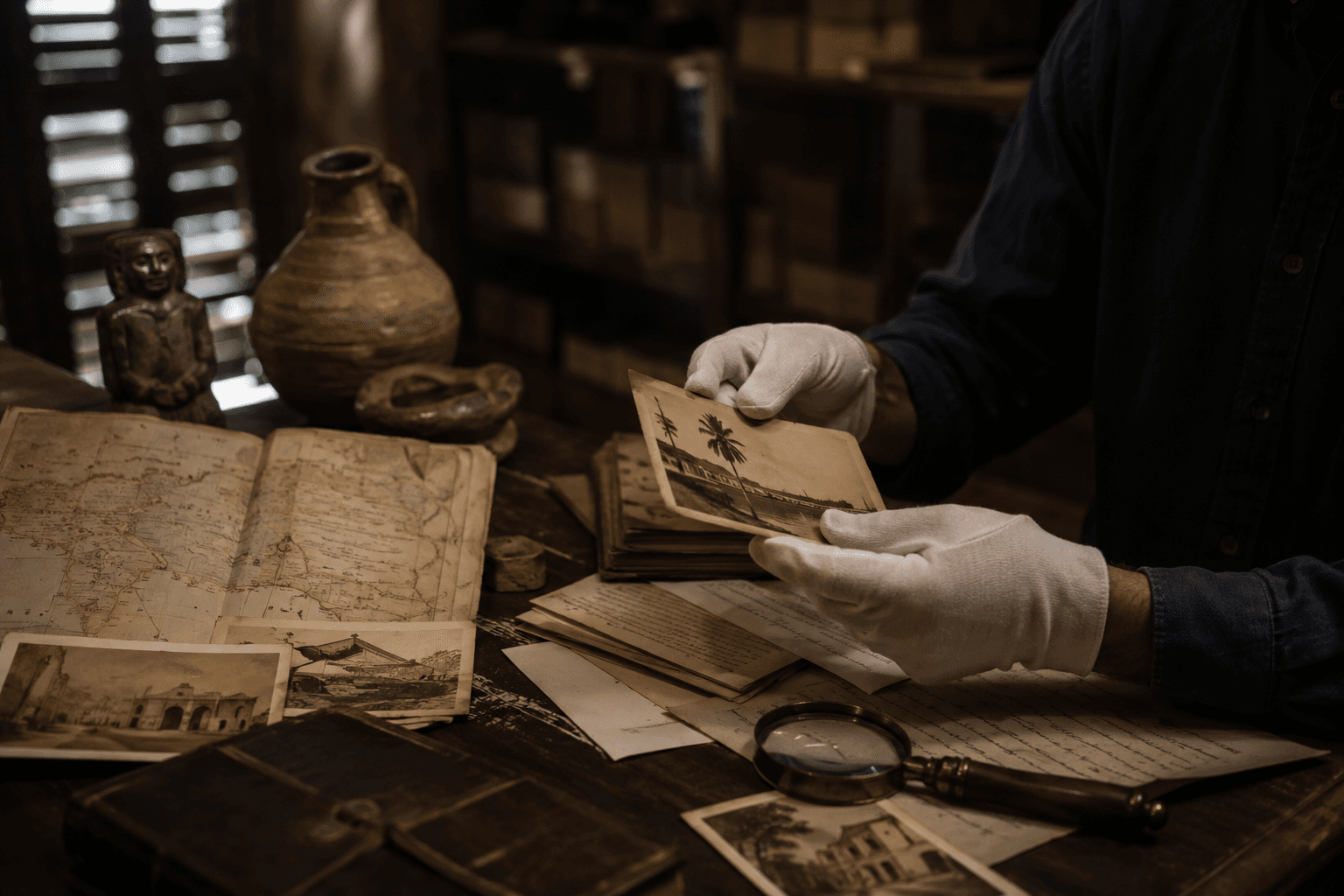
Follow evidence across Indigenous life, colonial violence, sovereignty, independence, Restoration, dictatorship, resistance, migration, and diaspora.
History becomes more useful when dates are connected to documents, objects, places, and competing interpretations.
Dominican history is layered across one island and many sovereignties. This page follows the evidence without turning conquest, independence, dictatorship, or migration into a simple national myth.
Archaeology, cave art, ceramics, settlement, exchange, and Indigenous knowledge complicate any story that begins with European arrival.
Material remains and colonial accounts must be read critically, especially when the record was created through unequal power.
Conquest reorganized land, labor, faith, population, and whose voices entered the archive.
Slavery and resistance are central to Dominican formation, not secondary influences around a European core.
The road to 1844 passed through competing empires, Haitian unification, local political projects, and changing definitions of nationhood.
A short timeline label contains several political projects and should not be reduced to one inevitable march toward independence.
1844 established a republic whose sovereignty, citizenship, and institutions still had to be defended and contested.
The Restoration War shows that independence was not a single completed event.
Debt, diplomacy, intervention, and occupation shaped institutions as well as resistance.
Read propaganda beside surveillance, exile, imprisonment, racial violence, victims, and organized resistance.
Dominican constitutional conflict, communist participation, evacuation concerns, and U.S. Cold War strategy must be distinguished rather than collapsed.
Migration, democratization, urban change, family memory, and transnational life continue to reshape how the past is narrated.
Museums, archives, monuments, homes, streets, and archaeological sites give history a material setting.
Explore places with contextAsk who created a source, why it survived, what it omits, and which claims remain disputed.
This section grows only when a related story is published and publicly available.

In April 1965, Santo Domingo became a battlefield over a question the death of Trujillo had failed to resolve: What political order would replace…

Few periods of Dominican history are more frequently simplified than the twenty-two years before independence. A familiar nationalist version runs…

A useful Dominican timeline should not begin with the country suddenly appearing on February 27, 1844. It should begin with the island. Long…

Dominican independence did not settle the question of Dominican sovereignty. Seventeen years after the republic was proclaimed in 1844, President…

The island did not begin when Europeans named it. That sentence sounds obvious. Tourism literature still manages to forget it. Santo Domingo’s…

Rafael Leónidas Trujillo ruled the Dominican Republic for more than three decades. Writing that sentence is easy. Understanding what it meant to…

A guide to archives as cultural infrastructure: preservation, access, regional reach, and the limits of the surviving record.