
La India Canela and the Voice of Dominican Accordion
A long-form profile of La India Canela’s accordion voice, her roots in Santiago Province, and the merengue típico tradition carried through her Smithsonian Folkways recording.
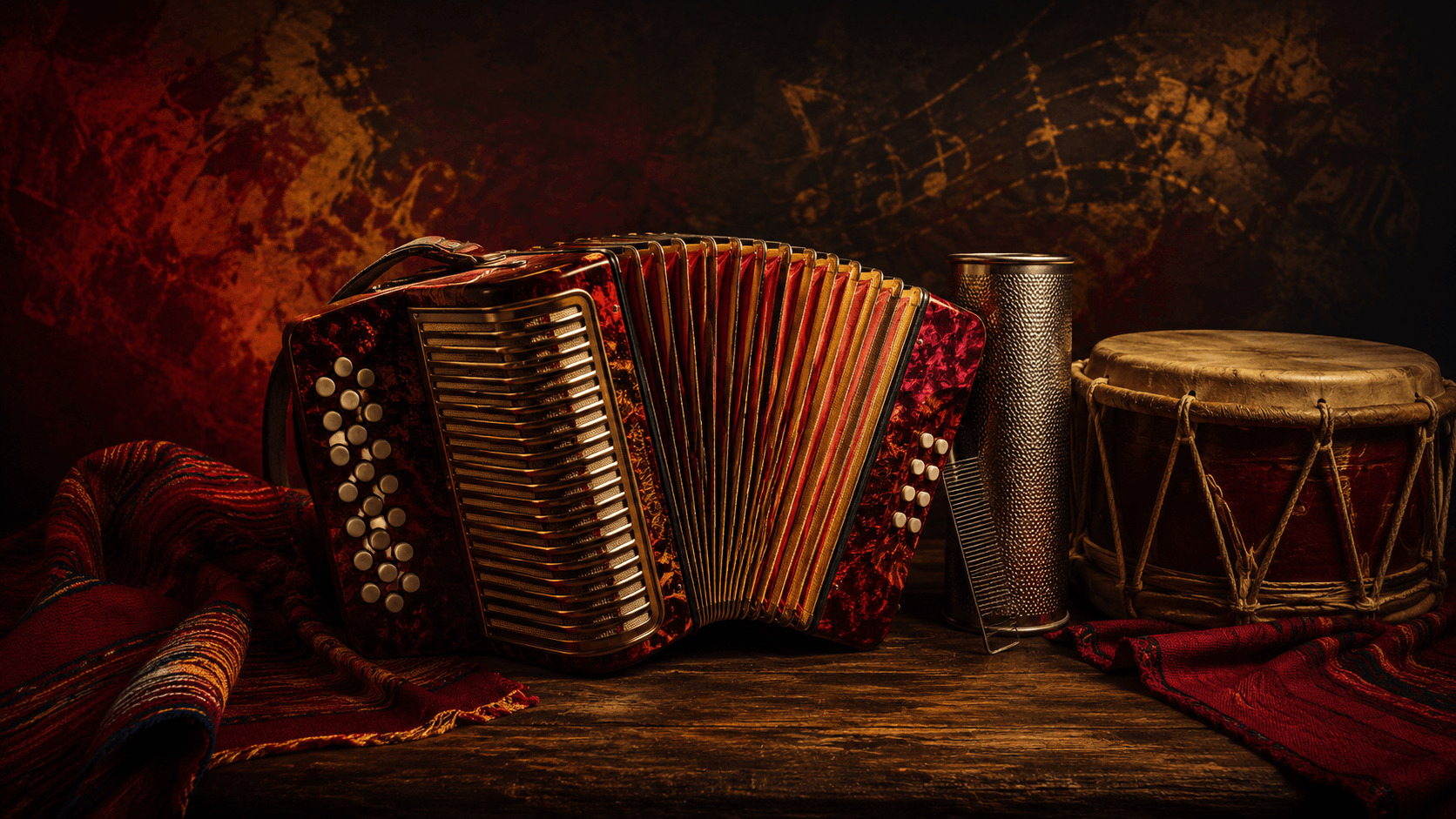
AI-generated editorial artwork inspired by Dominican accordion, güira, tambora, and merengue típico traditions.
Summary
La India Canela, born Lidia María Hernández López in El Limón, Villa González, is a Dominican accordionist whose music reflects the sound world of merengue típico: accordion, tambora, güira, saxophone, bass, and a dance rhythm rooted in Cibao life. This story follows her early exposure to the accordion, her formation within típico circles, and the Smithsonian Folkways recording that helped document her artistry for listeners beyond the Dominican Republic.
The accordion in Dominican merengue típico is not just a lead instrument. In the right hands, it becomes a voice: bright, percussive, quick to answer the tambora and güira, and close to the everyday life of the Cibao communities where the style has long been played.
La India Canela, born Lidia María Hernández López in El Limón, Villa González, grew up in that sound world. Smithsonian Folkways notes that she was one of the first in her family to carry music into a professional public career, though music was already present at home through relatives who played recreationally.
Her stage name carries Dominican color language and personality, while her playing carries the authority of a musician formed through local practice. Rather than treating típico as a museum piece, her work shows it as living dance music shaped by family, apprenticeship, performance, and regional memory.
The Smithsonian Folkways album Merengue Típico from the Dominican Republic placed that sound in a wider documentary frame. The recording foregrounds a working típico ensemble: accordion, tambora, güira, alto saxophone, electric bass, lead vocals, and the charge of a rhythm built for movement.
A syndicated NPR feature captured the physical intensity of her relationship with the instrument. Speaking about the accordion, La India Canela described the feeling in visceral terms: when she plays it, even her blood gets hot.
That is the center of this story: not a claim that she alone defines the tradition, but a portrait of how one Dominican accordionist carries a tradition forward with force, warmth, and a sound unmistakably tied to place.
Even my blood gets hot.
La India Canela, NPR/KOSU syndicated feature
Timeline
El Limón, Villa González
Santiago Province roots
Smithsonian Folkways identifies La India Canela as born in El Limón, Villa González, in Santiago Province.
Early life
Accordion at home
Her family setting included recreational accordion playing before she became a professional musician.
Formation
Learning within típico circles
Her musicianship developed through local networks and teachers connected to Santiago-area típico practice.
2008
Smithsonian Folkways recording
Merengue Típico from the Dominican Republic documented her accordion-led típico sound for Smithsonian Folkways.
2009
Smithsonian cultural context
Smithsonian Folklife materials placed her performance work within a broader presentation of Dominican traditional music.